

Artists
The hands behind crafts.
HARA Minoru | 原 稔
Location
Kyoto
History
Style
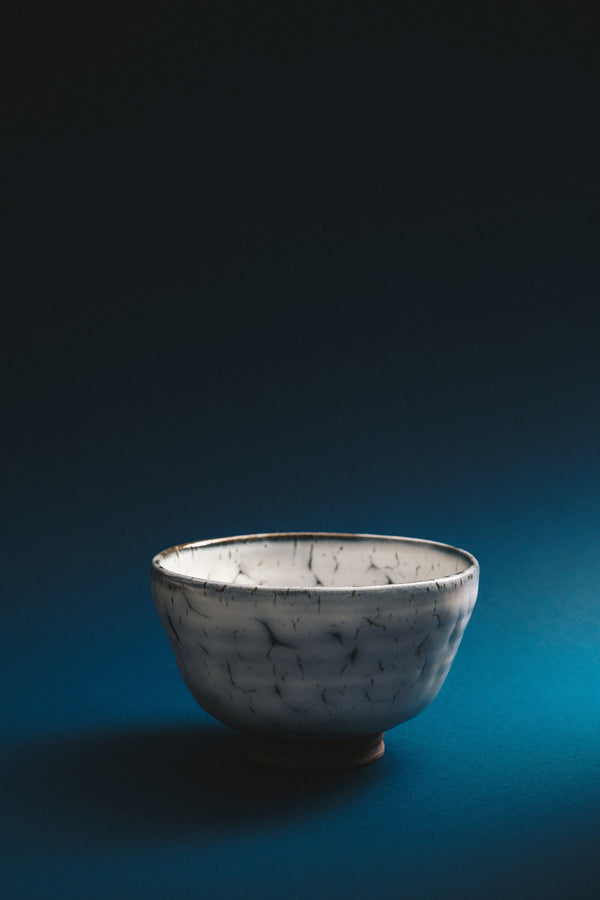
Trained under his father, master ceramicist Seiwa Hara, and working under the artistic name Seichō, Minoru Hara is a two-time recipient of the Kyoto Governor's Award — in 1996 and again in 2003. As a member of the Meiyōkai, the association of Kyoto's most distinguished kilns, he brings his own sensibility to the heritage of Seiwa Tōen, elevating traditional techniques such as kinzai mishima — gold-inlaid carved ware — into something unmistakably of the present. His artwork do not announce themselves; they quietly raise the register of wherever they are placed.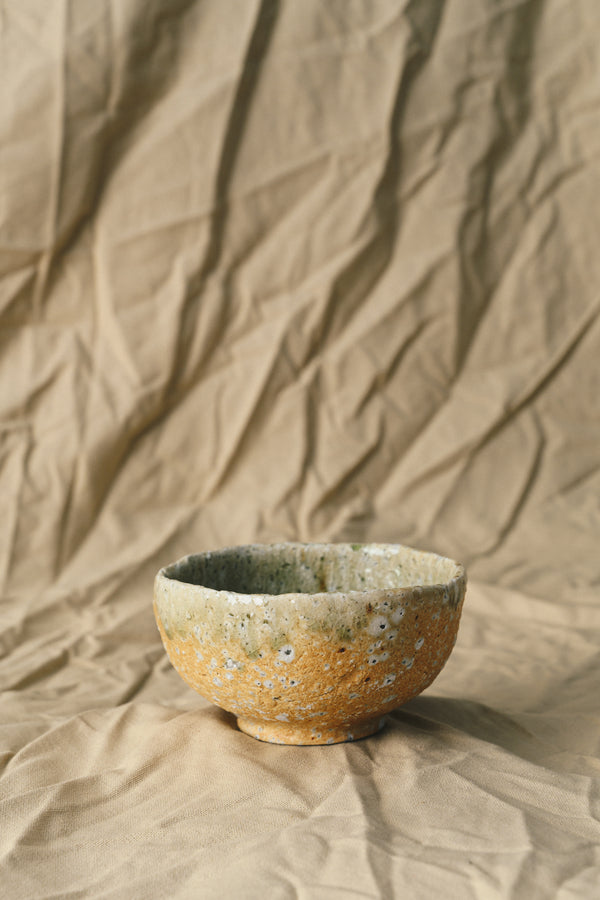
HASU Yoshitaka | 蓮 善隆
Location
Mie
History
Style
Since establishing Takahi Gama in Iga Ueno in 1979, Yoshitaka Hasu has worked exclusively in kurinuki — a technique in which a solid mass of clay is carved from the outside while the interior is hollowed out, closer in spirit to sculpture than to throwing. Over a career of more than four decades, he has combined natural ash glaze with iron to build surfaces of layered texture and depth, surfaces that shift and breathe with the changing light. His work has been adopted by Ginza Kojū (two Michelin stars, 2026 Guide) and Okuda in Tokyo, and by the Ritz-Carlton, Kyoto — destinations that understand, as he does, that an artwork and what it holds are never truly separate.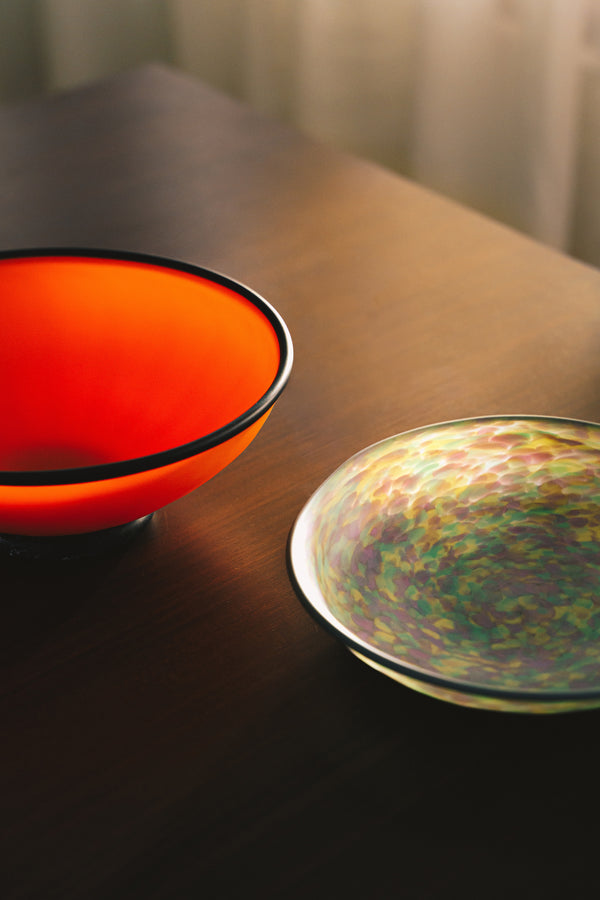
HIROSAWA Yoko | 広沢 葉子
Location
Yamanashi
History
Style
A graduate of the Tokyo Glass Art Institute, Yoko Hirosawa has refined her practice across international exhibitions in the United States and Europe, and on stages from the GAS Conference to Ginza Wako and Takashimaya. Her blown glass work — sinuous as a peacock's plume, lit from within by a stillness that shifts with the light — has earned a place in the canon of Japan's finest tea-ware craftspeople. In a medium of transparency and fragility, she finds silence, elegance, and a sense of 'ma (space/moment between things)' that speaks directly to the Japanese aesthetic imagination.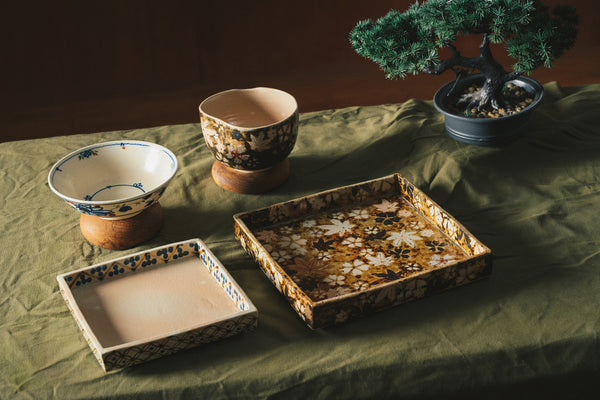
HORIOKA Kosho | 堀岡 洸匠
Location
Kyoto
History
Style
Working from their atelier in Higashiyama, Kyoto, Kosho Horioka and her husband carry forward the name and spirit of the founding Kosho — a name passed down through generations of devoted craft. In their hands, inherited tradition and two sensibilities woven into one give rise to artwork where distinction and warmth are inseparable. Each piece carries the quiet weight of lineage and the intimacy of two people making something together — a combination found nowhere else.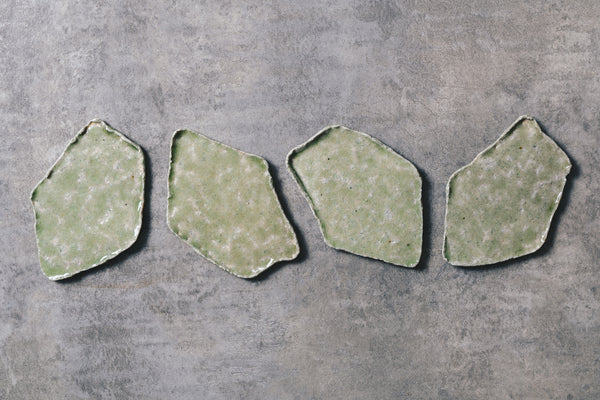
KOSAKA Daiki | 小坂 大毅
Location
Kyoto
History
Style
Taking the classical Chinese blue-and-white wares of the past as his touchstone, Daiki Kosaka works on grounds of wabi restraint, layering sometsuke and polychrome iro-e decoration in compositions that feel at once ancient and entirely his own — a reconstruction, not a revival. Born in 1988, he is among the younger voices in contemporary Japanese ceramics, yet the maturity of his brushwork and the stillness of his designs speak of an artist already at home in his own world.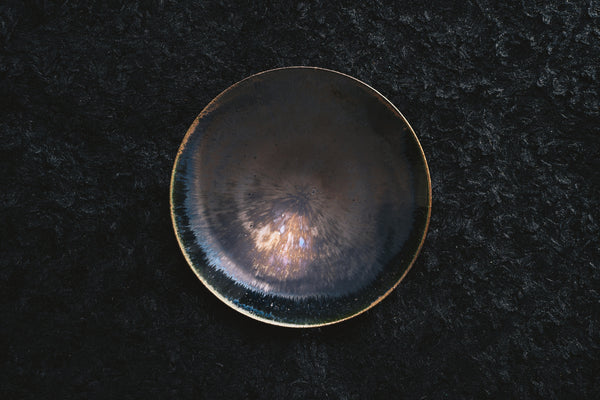
KUROKI Taira | 黒木 泰等
Location
Kyoto
History
Style
Taira Kuroki came to ceramics by way of sculpture — a passage that left its mark. Working in the green hills of Kameoka, just outside Kyoto, he works in oribe, amber glaze, and ash glaze, and speaks of his ambition with characteristic restraint: to make something that lifts the air of a room just slightly, that sits lightly in the hand, and that leaves a warmth in the heart. In his work, refinement never becomes severity. There is ease in the elegance — and that ease is its own form of mastery.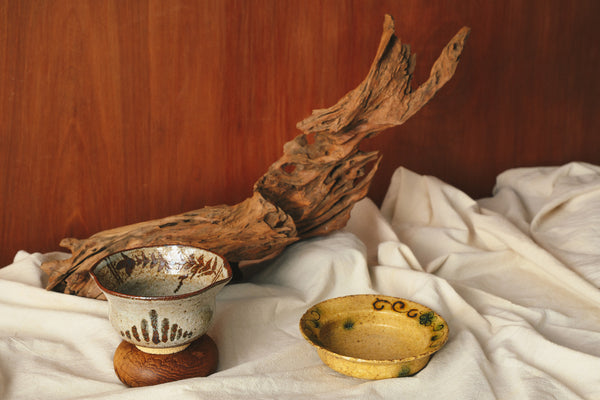
MIYATA Masaki | 宮田 真幸
Location
Kyoto
History
Style
The seventh-generation heir to the name Aoya Toko, Masaki Miyata works in Gojōzaka, Kyoto, in the tradition of Momoyama-period wares — shino, oribe, ki-seto — that his predecessor, the fifth-generation Nakamura Toko, explored with singular dedication. He reflects that although these wares were fired in Mino and Seto, it was the tea masters and men of power of the capital who commissioned them. To practise this tradition in Kyoto itself is, for him, an act of fidelity to those who first imagined such beauty. That sense of historical gravity lives quietly in every piece.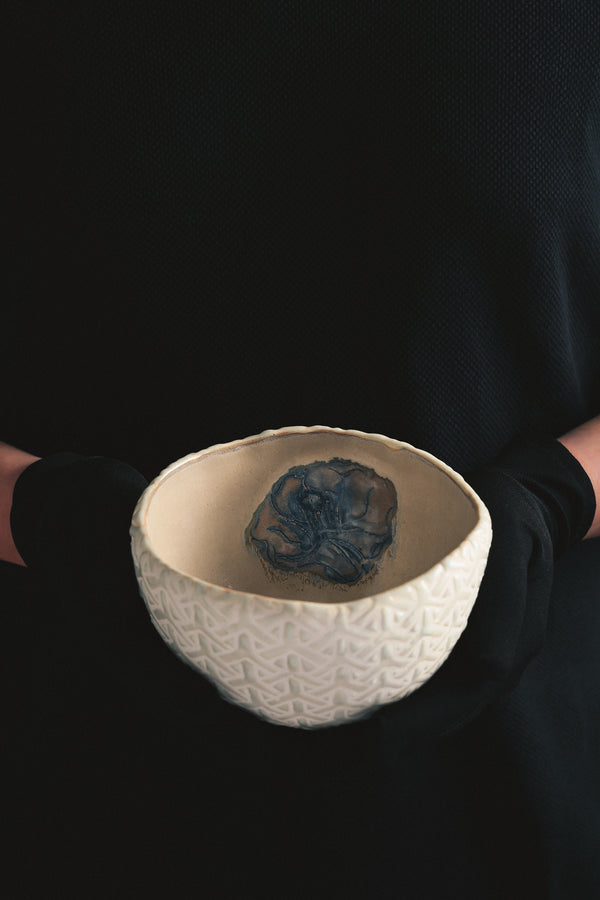
MORISATO Tatsuo | 森里 龍生
Location
Kyoto
History
Style
Tatsuo Morisato was shaped by a rare inheritance: his father, Matsuo Morisato, walked the vanguard of modern Japanese ceramics as a member of the Sōdeisha collective. Under the tutelage of master Iwao Katō, Tatsuo devoted himself to the heart of sometsuke — blue-and-white porcelain — developing a uniquely formulated gosu pigment that yields colours of uncommon depth, and a signature brushwork of soft, flowing gradation. His artwork is faithful to tradition yet unafraid of colour and contemporary form.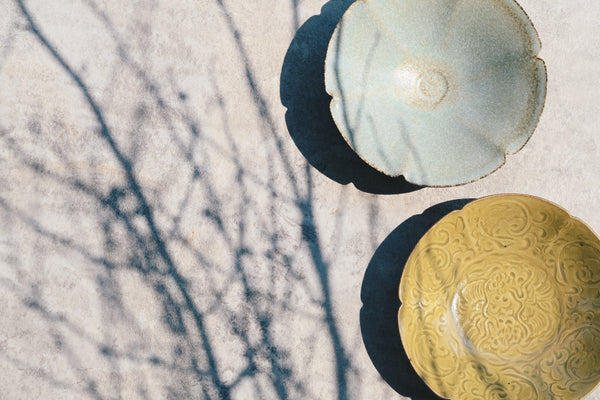
NAKAMURA Rikiya | 中村 力也
Location
Kyoto
History
Style
Born in Vancouver, Canada, Rikiya Nakamura completed his studies at the Kyoto Prefectural Ceramics Technical College in 2023 and now works from a studio in Shōgoin, Sakyō-ku, Kyoto. The artworks he produces carry something singular: a freedom from received convention, joined to the honesty of a hand trained in Japan's most rigorous ceramic tradition. His work is young, and unencumbered — and in that, quietly remarkable.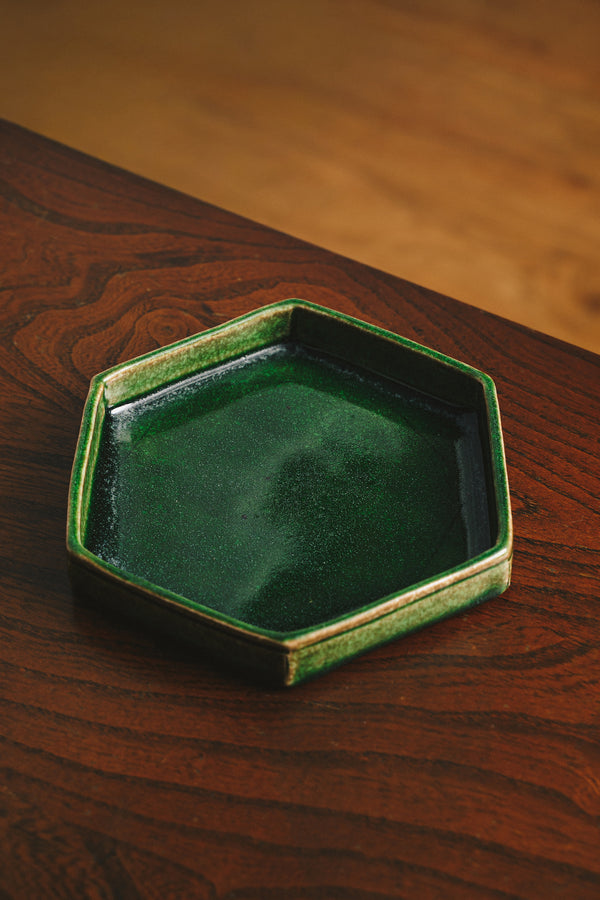
NOGUCHI Shigeji | 野口 繁次
Location
Shiga
History
Style
Trained under the late Nakamura Toko, Shigeji Noguchi eventually moved his kiln from Kyoto to the shores of Lake Biwa in Takashima, Shiga — a landscape of quiet breadth and unhurried light. His artwork from his atelier carry within them the precision of the Kiyomizu tradition in which he was formed, softened now by the open air of the lakeside. There is a patience to his work, and a depth that only reveals itself slowly — the kind of beauty that rewards long acquaintance.
SUGIE Satoshi | 杉江 智
Location
Kyoto
History
Style
After studying at the Toyama Glass Art Institute and a period teaching at the Universidad Nacional of Costa Rica, Satoshi Sugie established his studio in Kyoto. He formulates his crystal glass with an unusually high proportion of metal, a deliberate choice that yields a quality of melting lustre, structural strength, and transparency that seems almost liquid — as though water had found a permanent form. Winner of the Finn Lynggaard Prize at the International Glass Exhibition Kanazawa, he exhibits to devoted collectors year after year. In his hands, a hard and unforgiving material becomes something yielding and alive.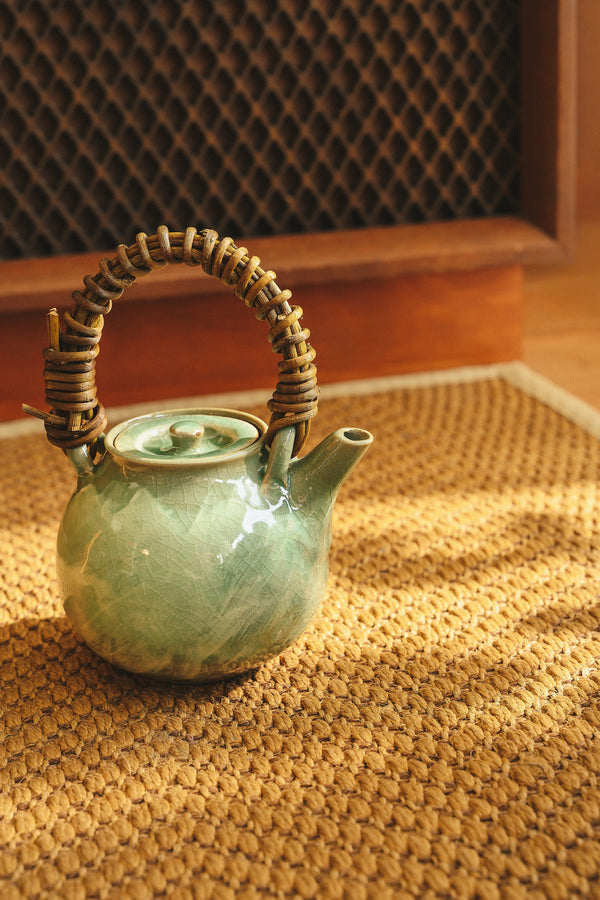
TAKEMURA Shigeo | 竹村 繁男
Location
Kyoto
History
Style
Cedar, vine, sunflower — Shigeo Takemura burns plants, draws ash from the embers, and blends it into glaze. It is a discipline of listening: to coax from each material its singular colour, its hidden character, and to offer it to the fire. The result is a world of natural ash glaze of extraordinary depth, as though the clear air and layered memory of Yamashina in Kyoto had been sealed quietly inside the clay. No two pieces are alike; no colour can be repeated.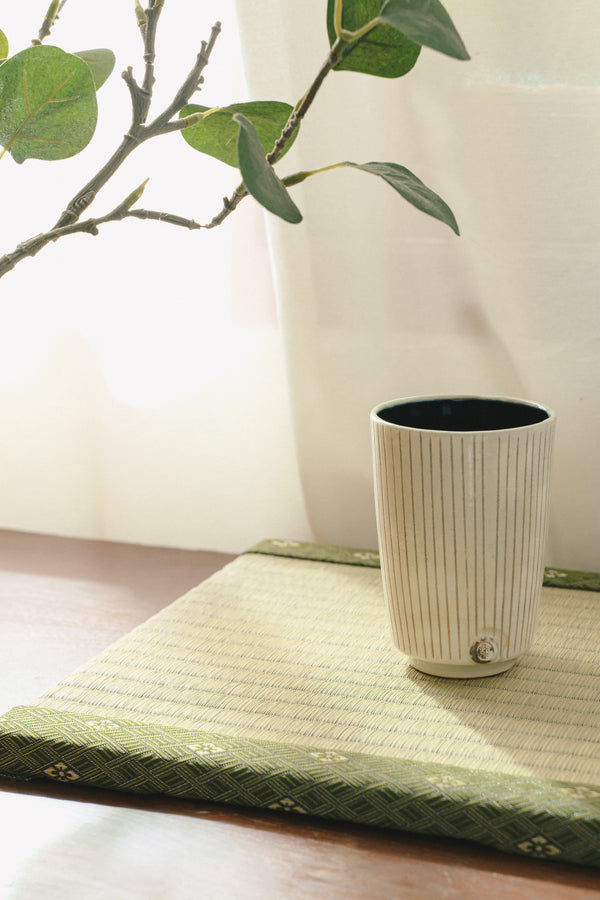
TAKEMURA Yotaro | 竹村 陽太郎
Location
Kyoto
History
Style
Growing up alongside his father Shigeo, immersed in the world of natural ash glazes, Yotaro has built upon that foundation to develop a style entirely his own. His work is distinguished by vivid color and geometric patterning, centered on an original technique called yudei-sai — a process of fusing pigments directly into the clay body. Through his signature use of turquoise blues and gradations of heki-yu (jade-green glaze), his aesthetic stands in deliberate contrast to his father's nature-derived palette: contemporary, clear, and boldly expressive. The colors his father draws from the earth, and those Yotaro creates himself — two distinct worlds emerging from the same kiln, together defining the richness of atelier.
